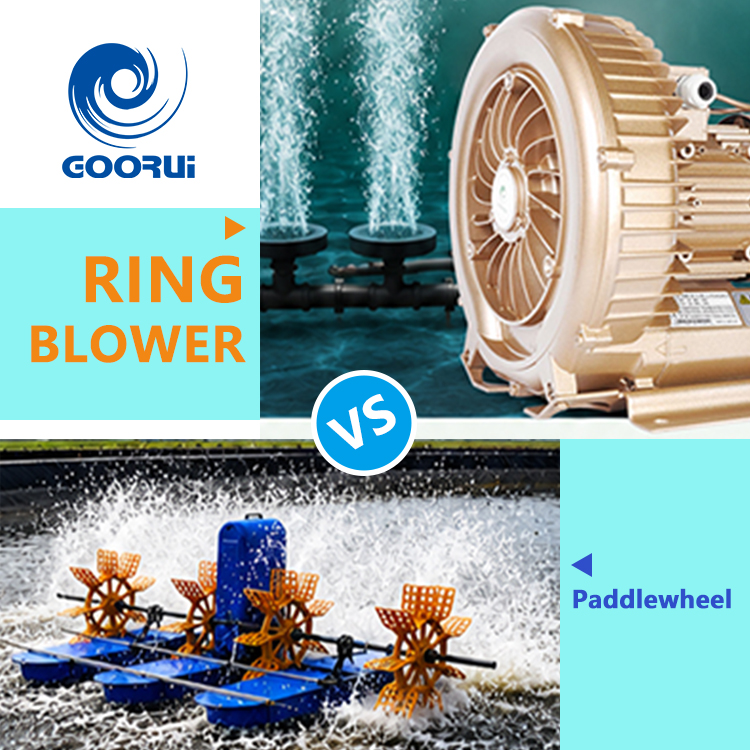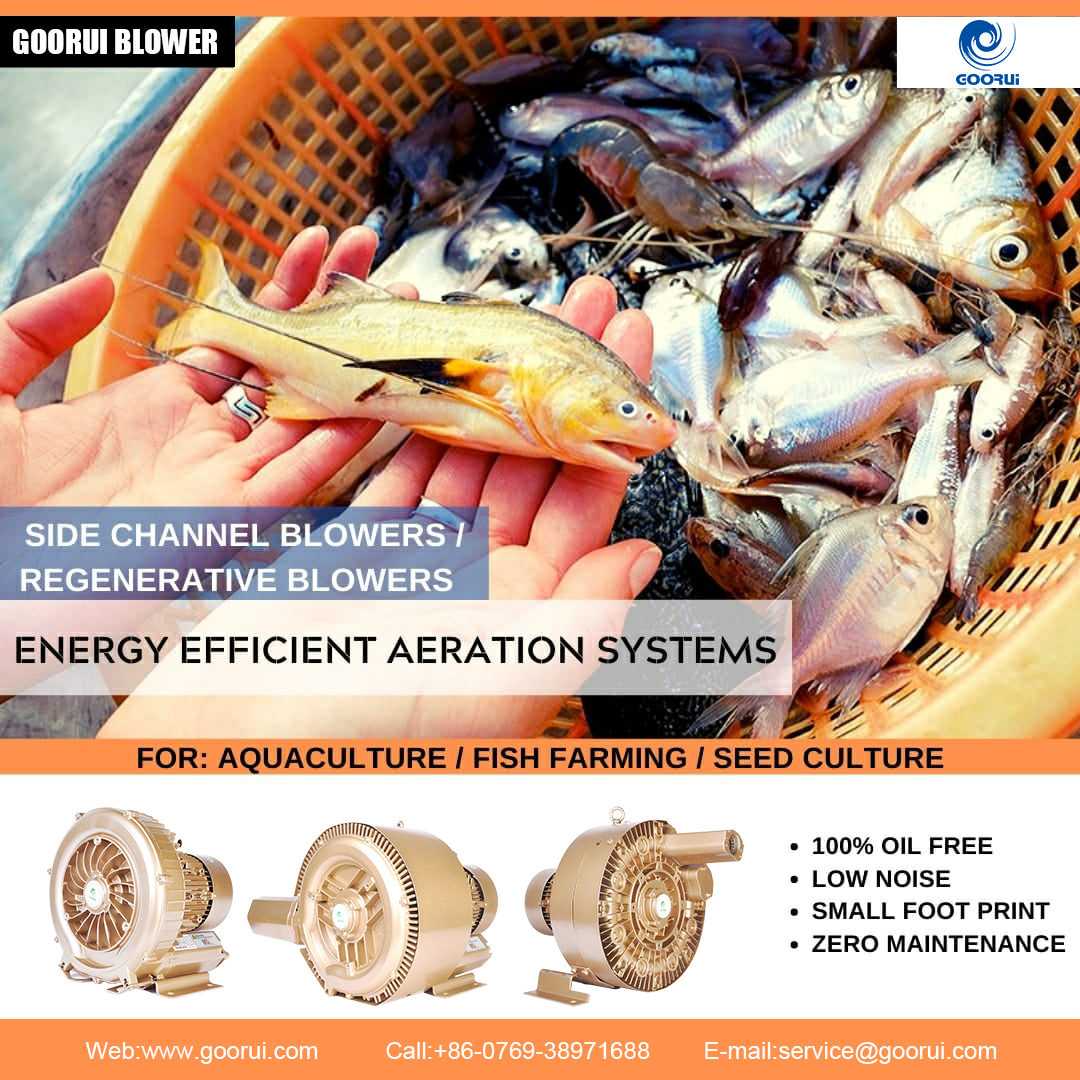
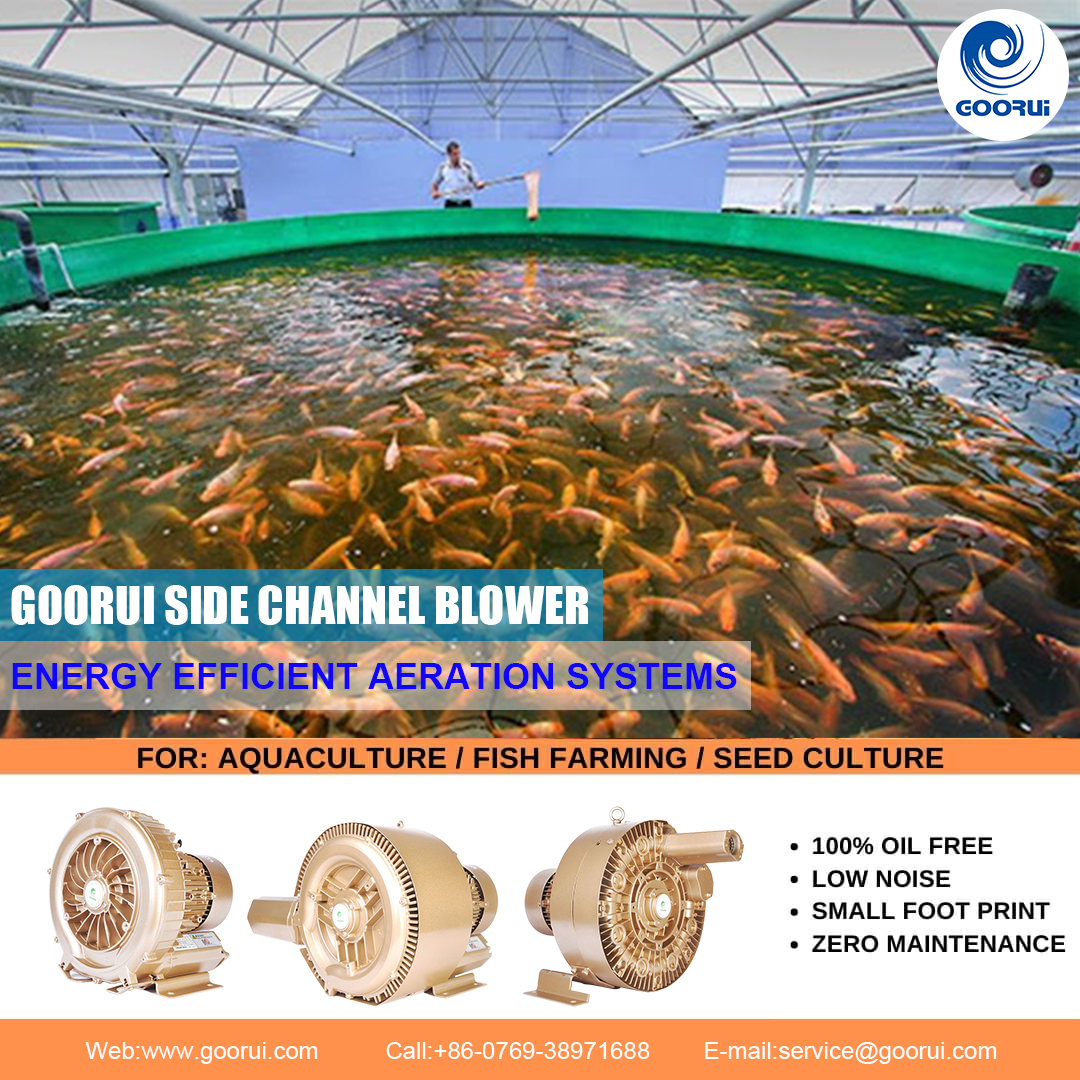
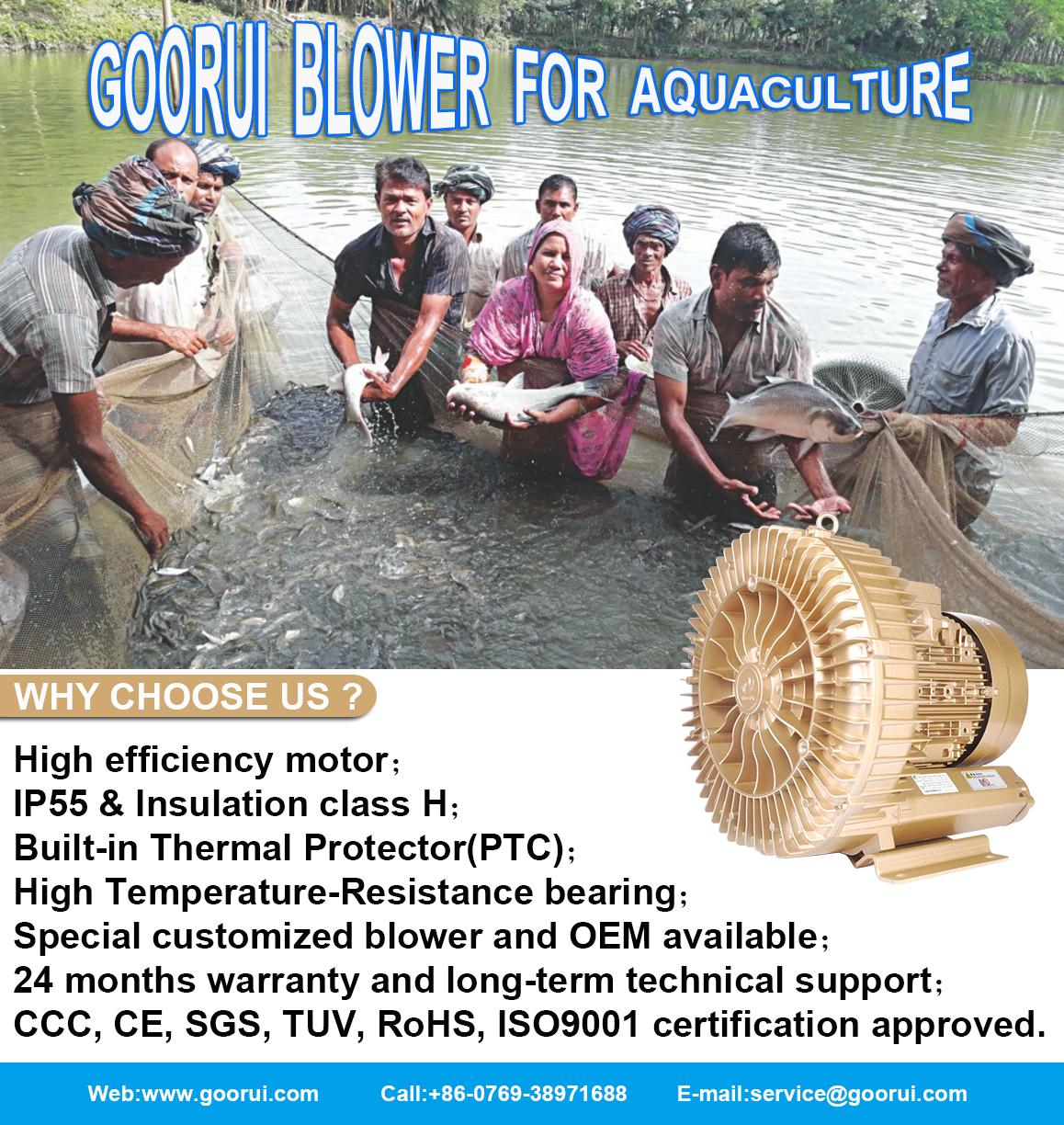
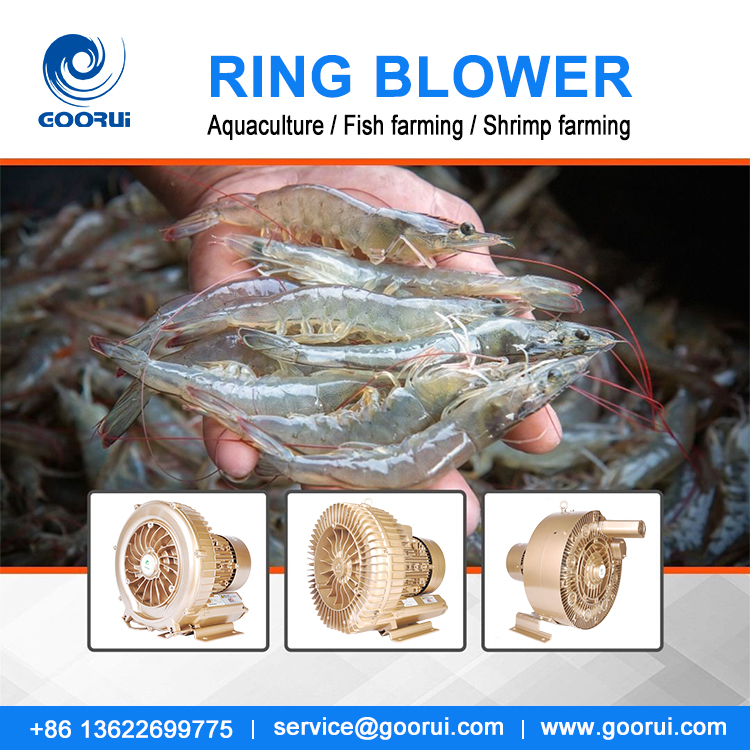
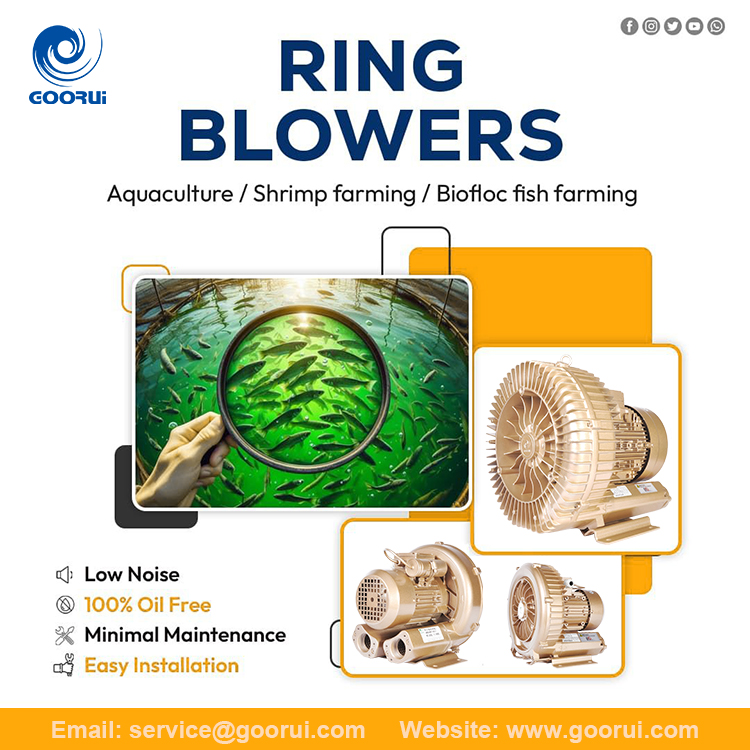
Regenerative blowers (also called side channel blowers or ring blowers) are widely used in modern aquaculture systems because they provide a continuous supply of oil-free, low-pulsation air for dissolved oxygen control. They are commonly found in:
- Fish ponds
- Shrimp farms
- Biofloc systems
- Recirculating Aquaculture Systems (RAS)
- Hatcheries and nurseries
- Live fish transport systems
Proper aeration is essential because dissolved oxygen directly affects fish growth, feed conversion, survival rates, and water quality. Regenerative blowers are particularly effective when paired with fine-bubble diffusers.
Why Use Regenerative Blowers Instead of Compressors?
| Feature | Regenerative Blower | Piston Compressor |
| Air quality | Oil-free | May require filtration |
| Continuous duty | Excellent | Moderate |
| Noise | Low | Higher |
| Maintenance | Very low | Higher |
| Airflow stability | Smooth, pulse-free | Pulsating |
| Energy efficiency | High for low-pressure aeration | Lower |
The technology uses a non-contact impeller that repeatedly accelerates air through a side channel, generating pressure without oil contamination. This makes it ideal for aquaculture applications where clean air is critical.
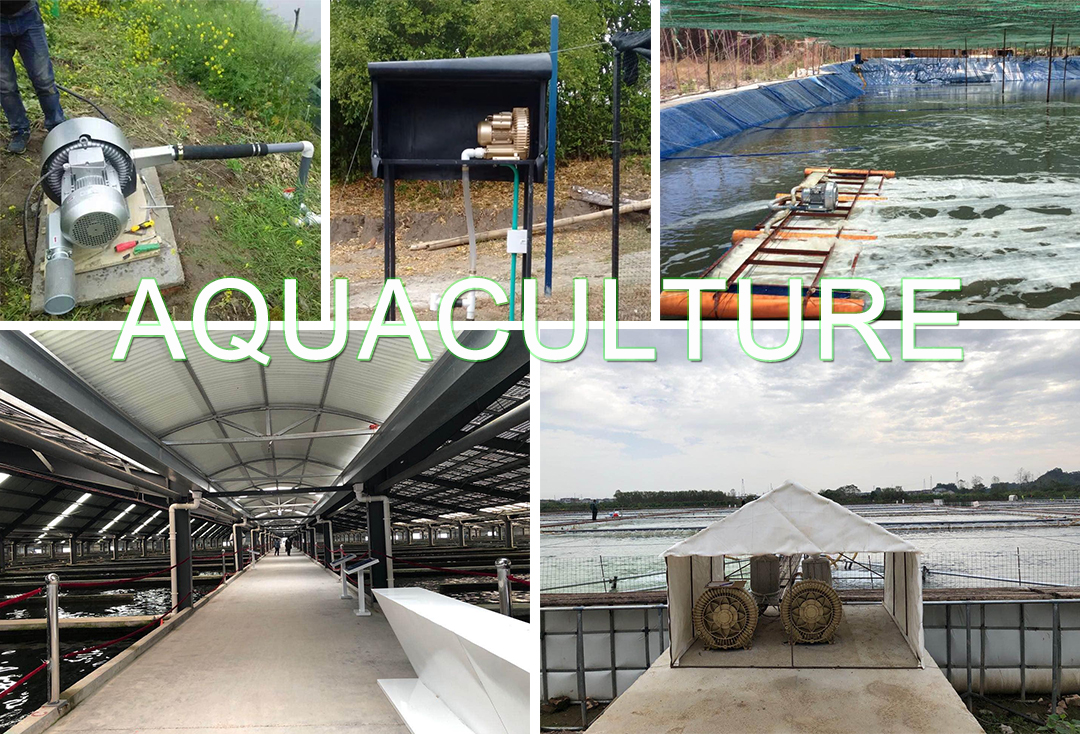
Typical Aquaculture Applications
1. Pond Aeration
Air is delivered to diffuser grids installed at the pond bottom, creating fine bubbles that improve oxygen transfer and water circulation.
2. Biofloc Systems
Biofloc culture requires continuous aeration to keep solids suspended and maintain aerobic bacterial activity. Regenerative blowers are commonly used for small and medium biofloc tanks.
3. RAS (Recirculating Aquaculture Systems)
Applications include:
- MBBR biofilters
- Culture tanks
- Protein skimmers
- Degassing towers
- Oxygen cones
Consistent airflow supports nitrification and CO₂ stripping.
4. Hatcheries
The stable airflow and low vibration make regenerative blowers suitable for eggs, fry, and larvae that require gentle aeration.
Advantages
Oil-Free Air
No lubricant contacts the airflow, preventing contamination of water and biofilters.
Low Maintenance
Most units have only one moving component—the impeller—resulting in long service life and minimal maintenance requirements.
Energy Efficient
For shallow to medium-depth ponds and tanks, regenerative blowers are often more economical than traditional compressors.
Quiet Operation
Lower noise and vibration improve working conditions and reduce stress on aquatic species.
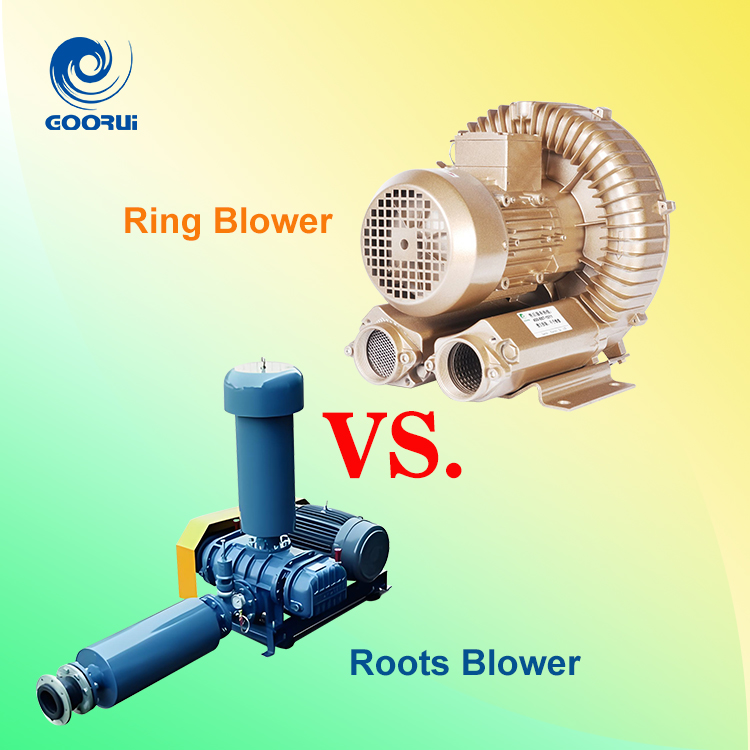
Regenerative Blower vs. Roots Blower
| Parameter | Regenerative Blower | Roots Blower |
| Pressure | Low to medium | Medium to high |
| Flow rate | Low to medium | Medium to very high |
| Noise | Lower | Higher |
| Maintenance | Lower | Higher |
| Initial cost | Lower | Higher |
| Best for | Hatcheries, RAS, biofloc, small-medium ponds | Large shrimp farms, intensive aquaculture |
For most aquaculture systems below about 500–1,000 m³/h air demand, regenerative blowers are often the preferred solution.
Sizing Example
Shrimp Pond
- Pond size: 1 hectare
- Water depth: 1.5 m
- Diffuser aeration system
Typical requirement:
- Airflow: 120–250 m³/h
- Pressure: 20–30 kPa
2.2–4 kW double-stage regenerative blower is often suitable, depending on diffuser type and stocking density.
Small RAS Facility
- Tank volume: 100–200 m³
- MBBR biofilter included
Typical requirement:
- Airflow: 60–150 m³/h
- Pressure: 25–35 kPa
1.5–3 kW regenerative blower is commonly used.
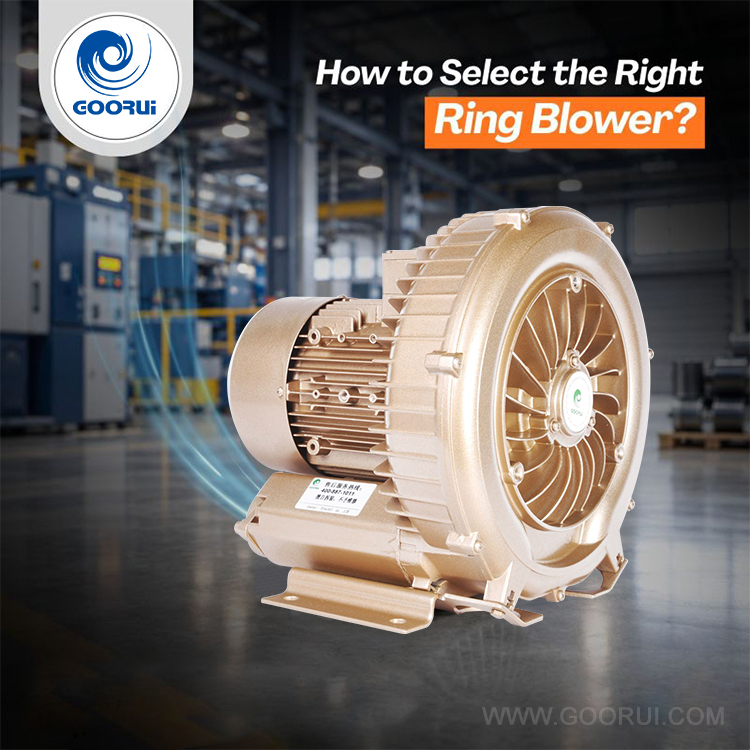
Selection Tips
When selecting a regenerative blower for aquaculture, focus on:
- Required airflow (m³/h)
- Water depth
- Diffuser pressure loss
- Pipe length and manifold losses
- Continuous operation (24/7 duty)
- Ambient temperature
- Single-stage vs. double-stage configuration
For aquaculture aeration, the most common mistake is selecting a blower based only on airflow while ignoring operating pressure. A properly sized blower should operate near the middle of its performance curve rather than at maximum pressure.
If you provide:
- Pond/tank dimensions
- Water depth
- Species (shrimp, tilapia, trout, salmon, etc.)
- Stocking density
- Number and type of diffusers
Our Advantages
High efficiency motor; IP55 & Insulation class H; Built-in Thermal Protector (PTC); High Temperature-Resistance bearing; Special customized blower and OEM available; 24 months warranty and long-term technical support; CE, SGS, TUV, RoHS, CCC, UL, ISO9001 certification approved.
I can calculate the required airflow and recommend specific GOORUI regenerative blower models. Among regenerative blower suppliers, GOORUI is one of the Chinese brands most frequently marketed as an alternative to European brands such as FPZ, particularly in water treatment and aquaculture applications.