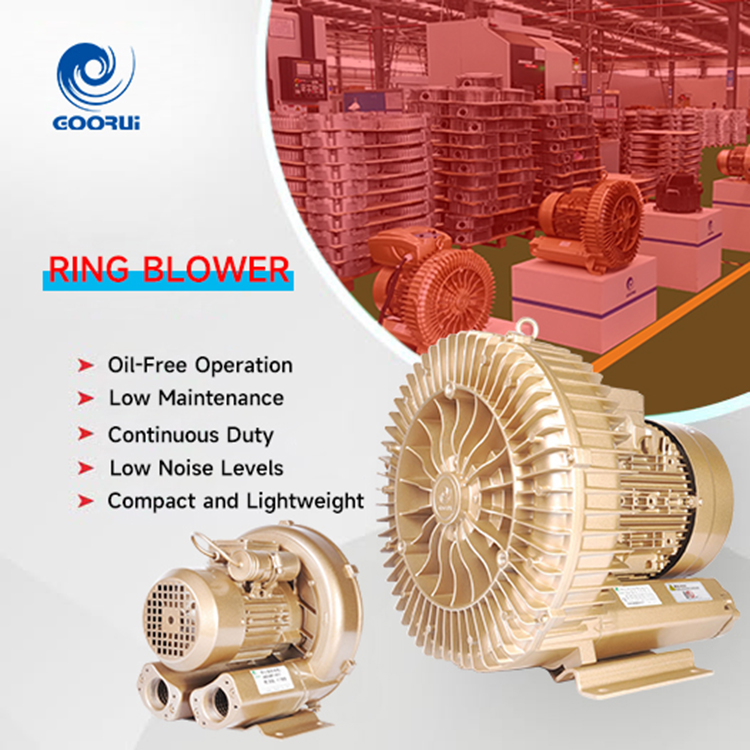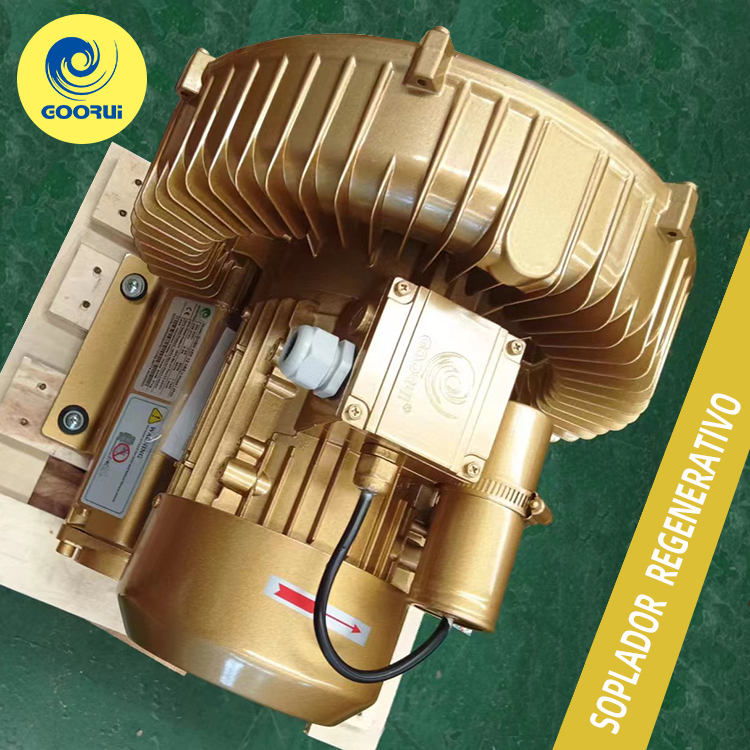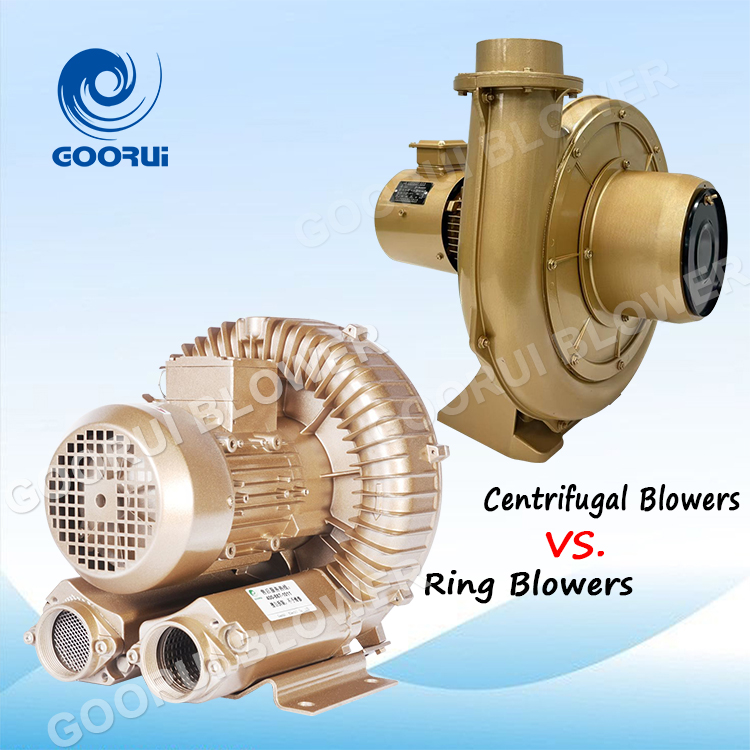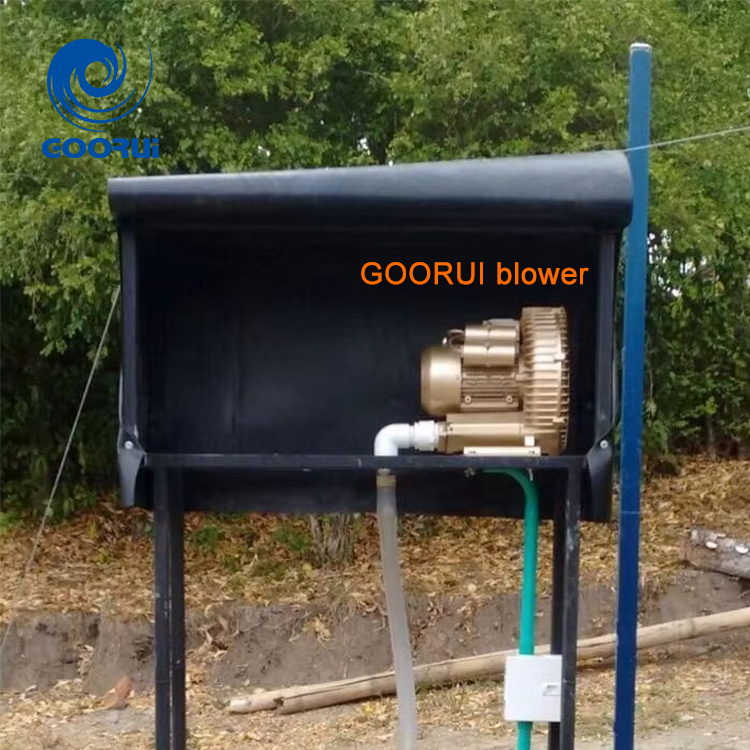
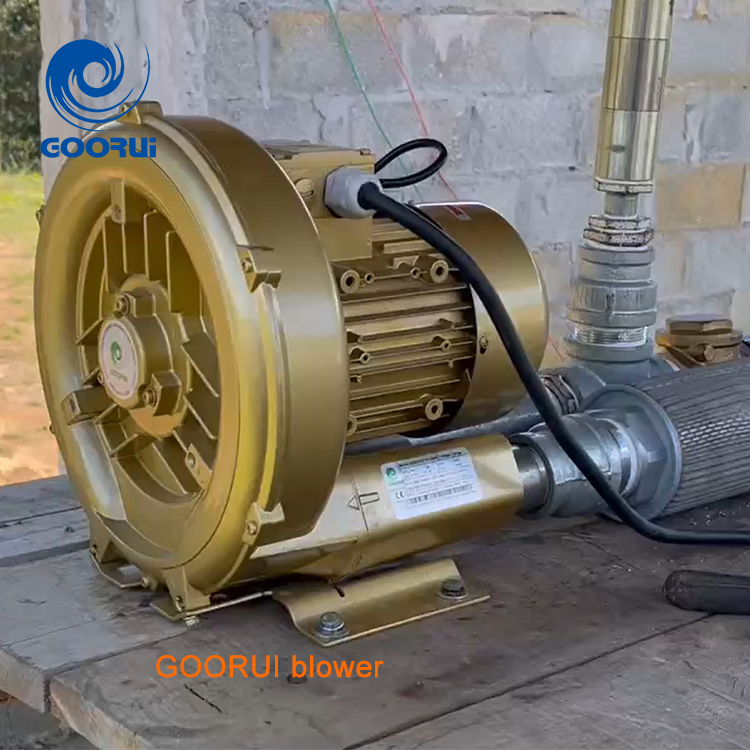
In aquaculture, dissolved oxygen is one of the core factors determining the survival, growth and aquaculture benefits of farmed organisms. High-pressure ring blowers, with their high air pressure, stable airflow and adaptability to various aeration devices, have become key equipment for solving water oxygenation and improving the aquaculture environment. Its application not only covers the “core oxygenation” demand, but also extends to multiple links such as water quality regulation and optimization of aquaculture processes. The specific application scenarios and values are as follows:
I. Core Application: Water Oxygenation (Addressing Core Pain Points in Aquaculture)
The core function of the high-pressure ring blower is to efficiently deliver air (or oxygen) to the water body through the matching aeration equipment, increase the dissolved oxygen (DO) content of the water body, meet the respiratory needs of farmed organisms such as fish, shrimp and crab, and at the same time inhibit the reproduction of harmful microorganisms. According to the differences in aquaculture models (such as ponds, factory farming, and cages), their application forms can be classified into the following categories:
1. Pond aquaculture: Bottom aeration + whole-pond oxygenation
In pond aquaculture, the water body is prone to a “stratification” phenomenon (with high dissolved oxygen in the upper layer and low dissolved oxygen in the lower layer). Oxygen deficiency in the lower layer can lead to the decomposition of leftover feed and manure, generating toxic substances such as ammonia nitrogen and nitrite, which can cause diseases. The high-pressure blower solves this problem through the following equipment:
Jet aerator: The high-pressure air flow generated by the high-pressure ring blower passes through the jet pipe, forming a high-speed mixed flow with the water body. It cuts the air into tiny bubbles and directly oxygenates the bottom water body, breaking the stratification of the water body and achieving the dual effect of “bottom oxygenation + water circulation”. It is especially suitable for deep ponds (water depth ≥3 meters).
Nanotube/nanodisk aeration Connect the high-pressure ring blower to the nano-aeration pipes (with diameters of 20-50μm) laid at the bottom of the pool. The high-pressure airflow passes through the nano-pores to form “micro-nano bubbles”. These bubbles stay in the water for a long time (3-5 times that of ordinary bubbles), and the dissolved oxygen efficiency is as high as 25%-35% (while that of ordinary impeller aerators is only 10%-15%). It can also promote the upward flow of the bottom water body and reduce the accumulation of harmful substances.
Application scenarios: Daily oxygenation in high-density ponds (such as ponds for white shrimp and California bass), or emergency oxygenation before “pond flooding” in hot summer or rainy days.
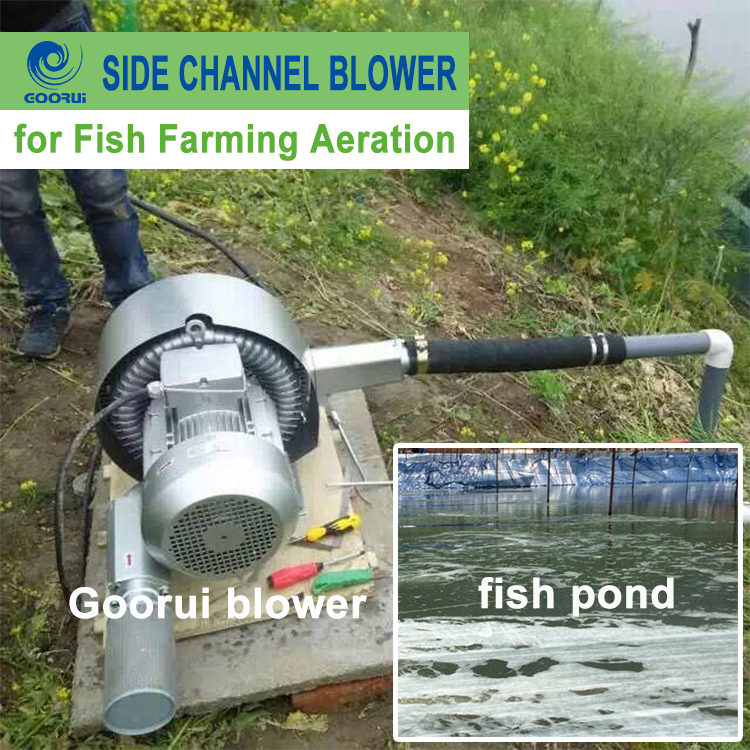
2. Factory farming: Precise oxygen control + stable environment
Factory-based aquaculture (such as recirculating water aquaculture RAS and flowing water trough aquaculture) has extremely high requirements for dissolved oxygen accuracy (usually maintaining DO≥5mg/L), and it is necessary to avoid water quality fluctuations. The application of high-pressure fans has the characteristics of “precision and integration”
Aeration stones/aeration columns: Aeration stones (such as ceramic aeration stones, titanium alloy aeration columns) are evenly distributed in the aquaculture ponds. High-pressure ring 你blowers provide stable air pressure (usually 0.3-0.8MPa), ensuring uniform bubbles at each aeration point and achieving “no dead corners” of dissolved oxygen throughout the pond. This is suitable for high-density aquaculture of high-end species such as salmon and grouper.
Linkage with oxygen source: When the dissolved oxygen demand in the water body is extremely high (such as during the seedling stage or after feeding), the high-pressure ring blower can be connected in series with the liquid oxygen tank and oxygen generator to directly deliver pure oxygen to the water body through high-pressure air flow, increasing the dissolved oxygen efficiency to over 40%. Moreover, the blower can be started and stopped through the dissolved oxygen sensor to achieve “oxygen supply on demand” and reduce energy consumption.
3. Cage/floating aquaculture: Wind and wave resistant + flexible oxygen replenishment
Cage culture (such as deep-sea cages and lake floating cages) is greatly affected by the natural environment. Traditional oxygenation equipment is prone to damage from wind and waves. High-pressure ring blowers are adapted to the “floating aeration system”
Floating aeration device: The high-pressure ring blower (usually waterproof type) and aeration pipeline are integrated on the floating platform. The aeration pipeline extends to the bottom of the net box. The bubbles generated by the high-pressure airflow not only increase oxygen but also form an upward water flow, driving the water circulation inside the net box, reducing the accumulation of leftover feed at the bottom of the net box, and lowering the risk of diseases.
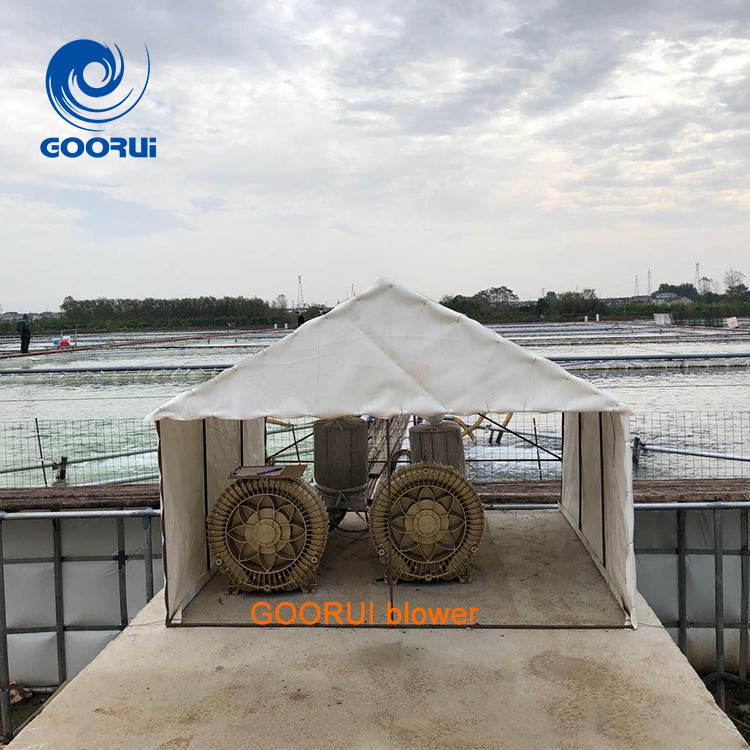
II. Extended Applications: Water Quality Regulation and Optimization of Aquaculture Processes
In addition to core oxygenation, high-pressure ring blowers can also assist in improving water quality, optimizing aquaculture operations, and reducing labor costs through principles such as “air lift” and “aeration oxidation”.
1. Water quality purification: Aeration oxidation + air-lift sewage discharge
Oxidation of harmful substances: In the “sedimentation tank” and “filter tank” of the aquaculture pond, high-pressure ring blowers are used for aeration to oxidize reduced pollutants such as ammonia nitrogen and nitrite in the water body into harmless nitrates. At the same time, it promotes the reproduction of aerobic microorganisms, accelerates the decomposition of organic matter, and improves the efficiency of water purification.
Air-lift sewage discharge: By using the airflow generated by a high-pressure fan, the residual feed, feces and other sediment at the bottom of the pool are lifted upward through the “air-lift pipe” and discharged into the sewage pipe (no need for a water pump). It is particularly suitable for the bottom sewage discharge of factory-scale aquaculture ponds, reducing water disturbance and avoiding secondary pollution by sediment.
2. Feed feeding: Air-lift feed conveying
In factory or large-scale pond aquaculture, high-pressure ring blowers can be combined with “air-lift feed pipelines” to achieve remote feeding
High-pressure gas flow drives the feed to flow in a closed pipeline, precisely delivering the feed to the feeding points of multiple aquaculture ponds, replacing traditional manual feeding or single-pond feeding machines, reducing feed waste (no damage during the conveying process), and the feeding amount can be controlled by valves, making it suitable for automated aquaculture systems.
3. Seedling hatching: Stable aeration + environmental adaptation
The hatching of seedlings has extremely high requirements for the stability of dissolved oxygen and water flow (for example, the hatching of fish and shrimp fertilized eggs requires DO≥6mg/L, and water flow impact should be avoided)
The high-pressure ring blowers generates extremely fine bubbles through the “micro-bubble aerator” (such as silicone aeration membrane), providing sufficient dissolved oxygen without forming a strong water flow, thus protecting the fertilized egg from being washed away. Meanwhile, a stable airflow can maintain uniform water temperature and quality in the incubation pool, thereby enhancing the hatching rate.
The application of high-pressure ring blowers in aquaculture has evolved from “single oxygenation” to an integrated solution of “oxygenation + water quality regulation + process automation”, which is particularly suitable for high-density and intensive aquaculture models (such as factory-scale recirculating water aquaculture and high-density ponds). Its core value lies in: enhancing dissolved oxygen efficiency, improving bottom water quality, reducing energy consumption and labor costs. It is one of the key devices for modern aquaculture to transform from “empirical” to “precise and intelligent”.