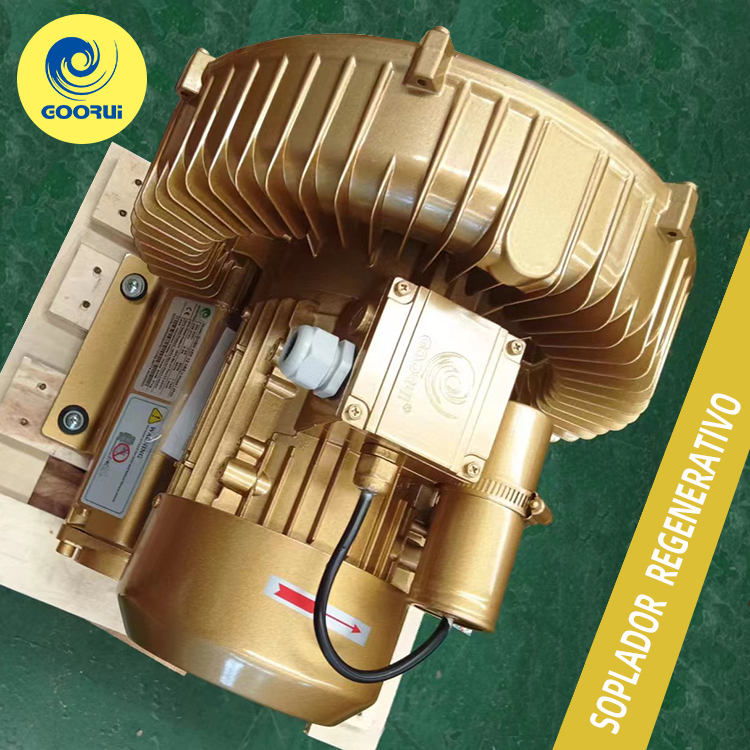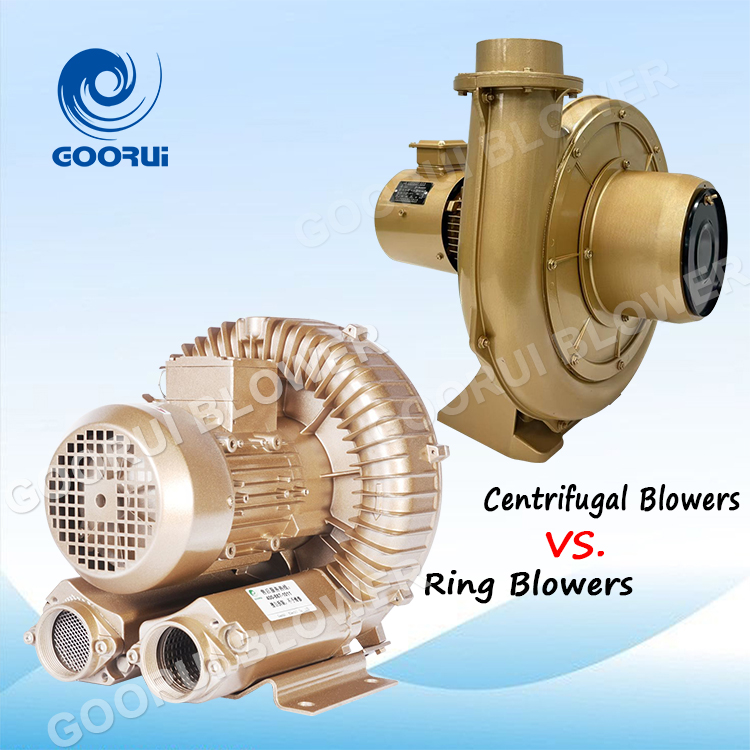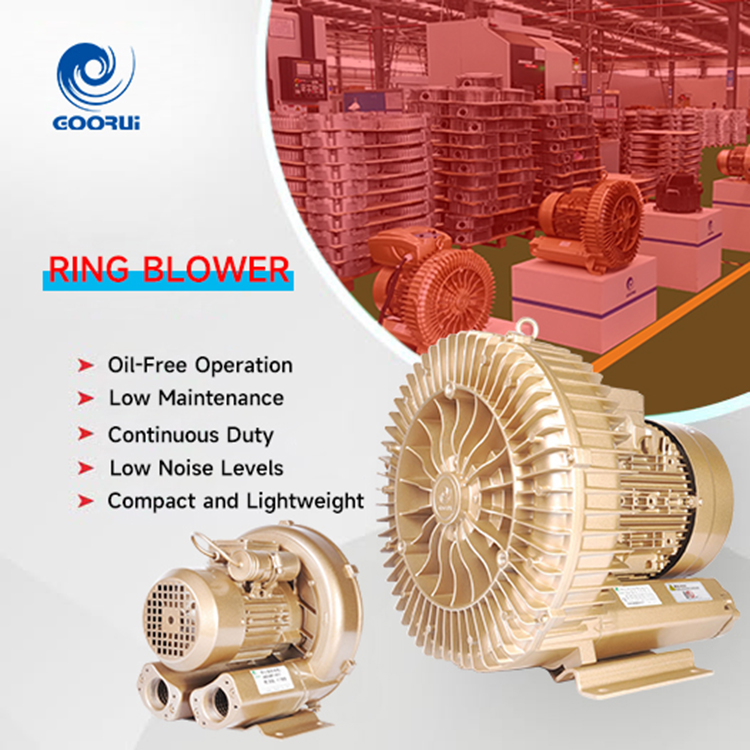
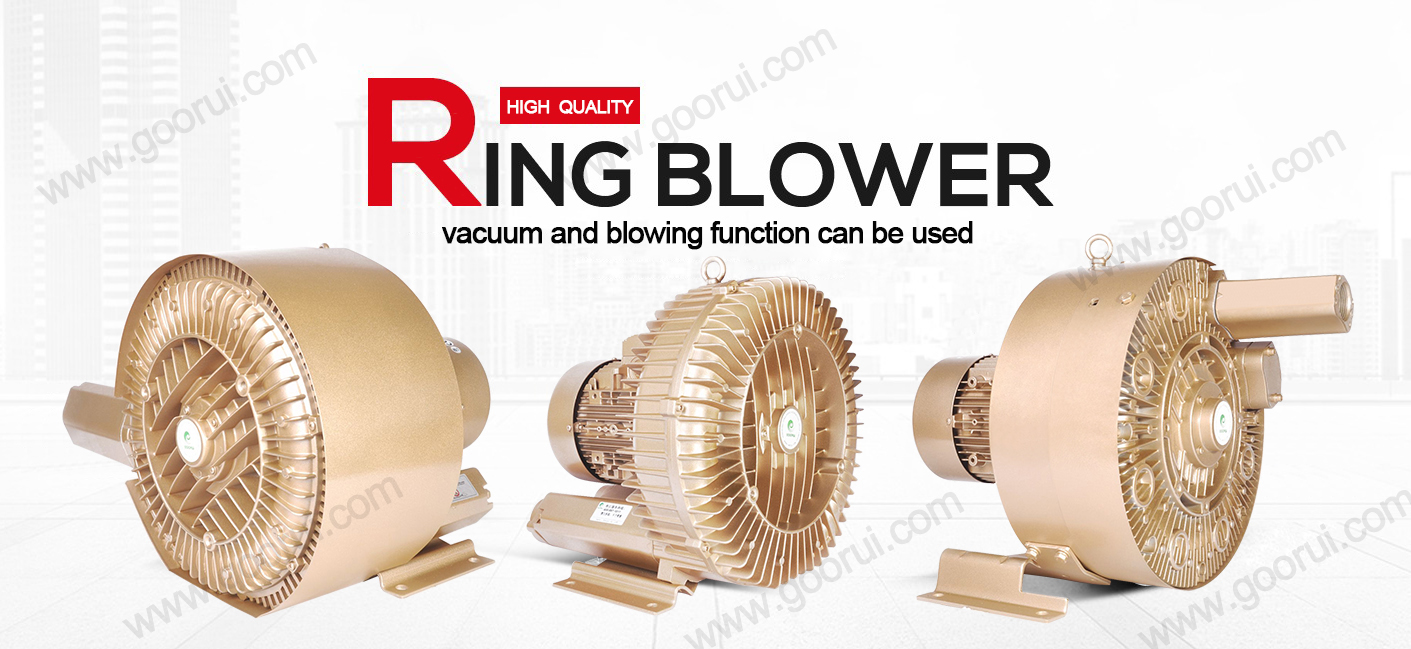
A ring blower, also known as a side channel blower or regenerative blower, is a non-contact, oil-free air-moving device designed to generate medium-pressure airflow for industrial, commercial, and environmental applications. Unlike conventional fans or compressors, a ring blower operates with a unique impeller and housing arrangement that produces high volumes of clean, pulsation-free air.
Ring Blower Working Principle
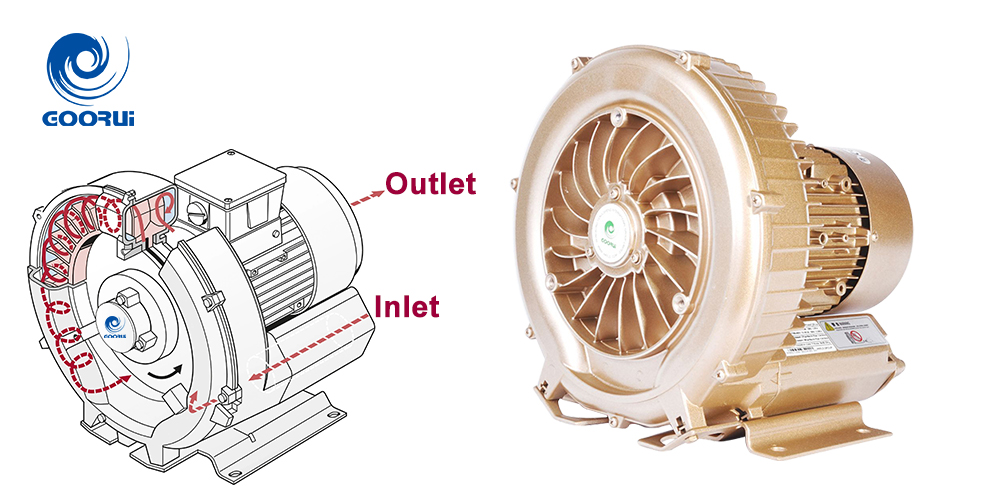
A ring blower works on the regenerative principle:
1. Air Intake – Ambient air enters the blower through an inlet filter and passes into the impeller channels.
2. Regeneration Process – The impeller consists of a series of radial blades mounted inside a toroidal (ring-shaped) chamber. As the impeller rotates, air is trapped between the blades and the casing, gaining velocity.
3. Side Channel Effect – The kinetic energy is converted into pressure energy as the air repeatedly circulates within the side channel before being expelled. Each circulation increases the air pressure incrementally.
4. Air Discharge – The compressed air exits the outlet with minimal pulsation, making it suitable for sensitive applications.
Key Features
· Oil-Free Operation – The impeller does not contact the casing, ensuring no lubrication is needed.
· Low Maintenance – No direct mechanical contact between moving and stationary parts.
· Continuous Duty – Designed for 24/7 operation.
· Low Noise Levels – Many units include integrated silencers.
· Compact and Lightweight – Easy to install in tight spaces.
Ring Blower – Technical Specifications
While specifications vary by model and manufacturer, typical parameters include:
· Airflow Rate: 50–2,000 m³/h
· Pressure Range: Up to 750 mbar (positive or negative)
· Power Range: 0.2–30 kW
· Material: Aluminum alloy, stainless steel for corrosive environments
Applications of Ring blower
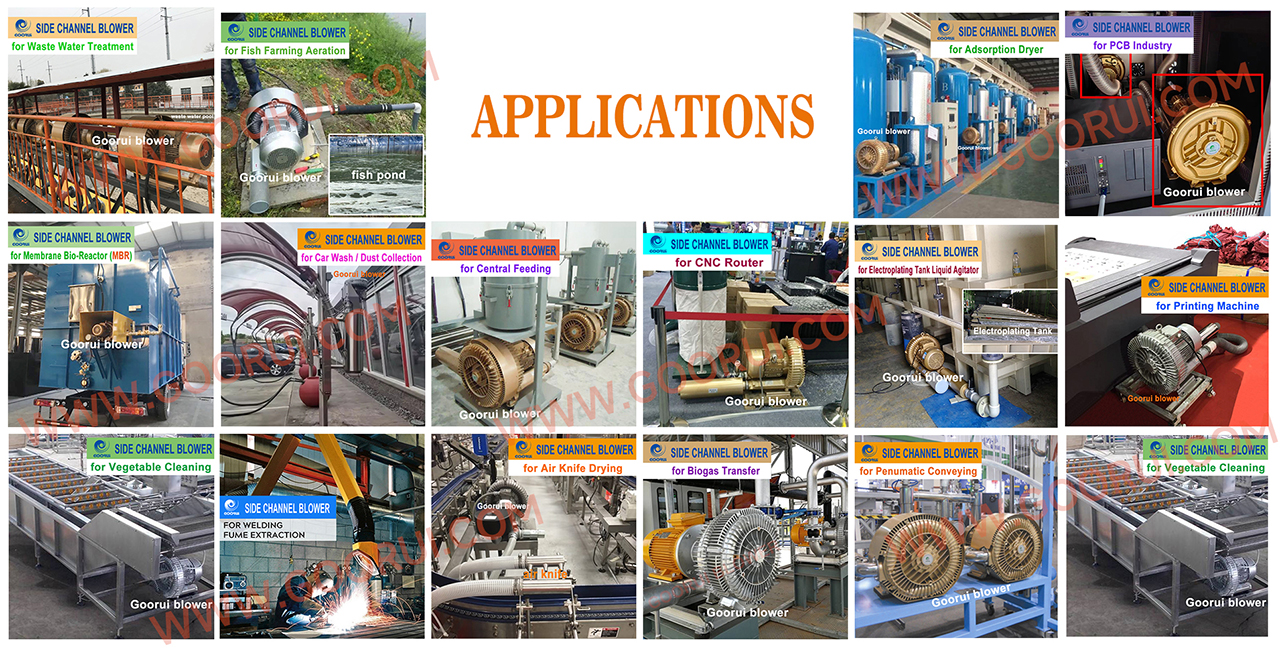
Ring blowers are widely used due to their reliability and clean airflow:
· Aquaculture – Supplying oxygen to fish ponds.
· Wastewater Treatment – Aerating tanks to promote biological activity.
· Pneumatic Conveying – Transporting powders, grains, and pellets.
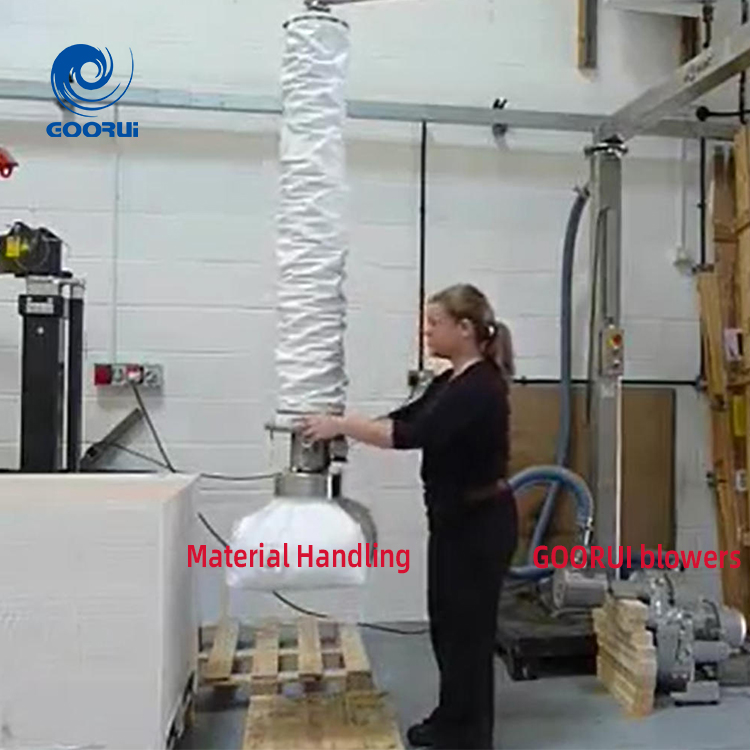
· Vacuum Lifting – Handling glass, wood panels, and sheet metal.
· Packaging Machinery – Removing dust or providing suction.
· Printing Industry – Paper feeding and drying.
· Electronics Manufacturing – Cooling and fume extraction.
Advantages
· Energy-efficient at medium pressures.
· Low vibration and noise.
· Oil-free air output.
· Versatile for both pressure and vacuum applications.
Limitations
· Not suitable for very high pressures (compressors are better for that).
· Airflow drops significantly if system restrictions increase.
· Requires protection from moisture and dust ingress for longevity.
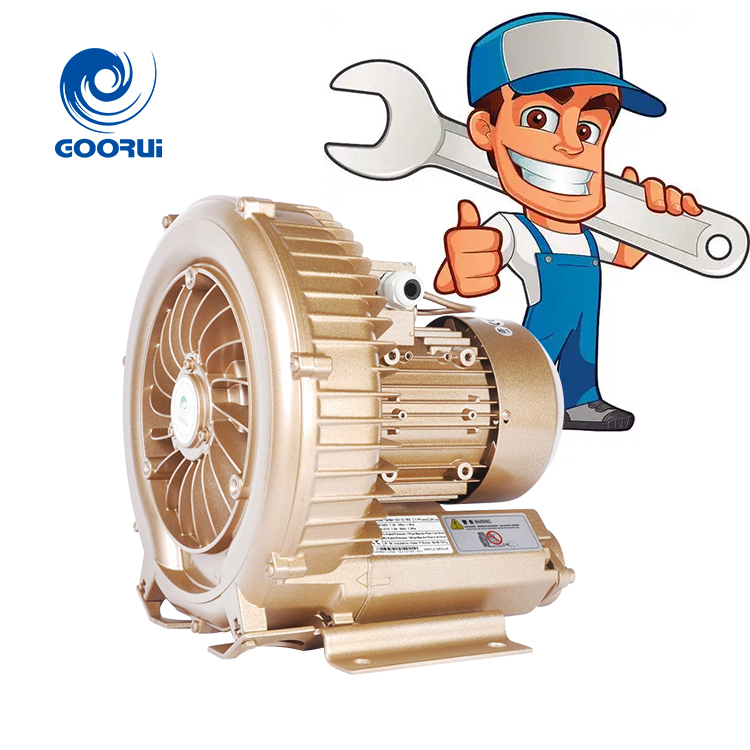
Maintenance Tips
· Regularly check inlet filters to prevent dust buildup.
· Monitor bearing condition for smooth operation.
· Keep the blower in a clean, dry environment.
· Ensure the motor is running at the correct voltage and frequency.
Conclusion
Ring blowers are a dependable, maintenance-friendly solution for applications requiring clean, continuous airflow at medium pressures. Their oil-free design makes them especially suitable for industries where air purity is critical. With proper care, a ring blower can deliver years of trouble-free performance in diverse industrial and environmental systems.