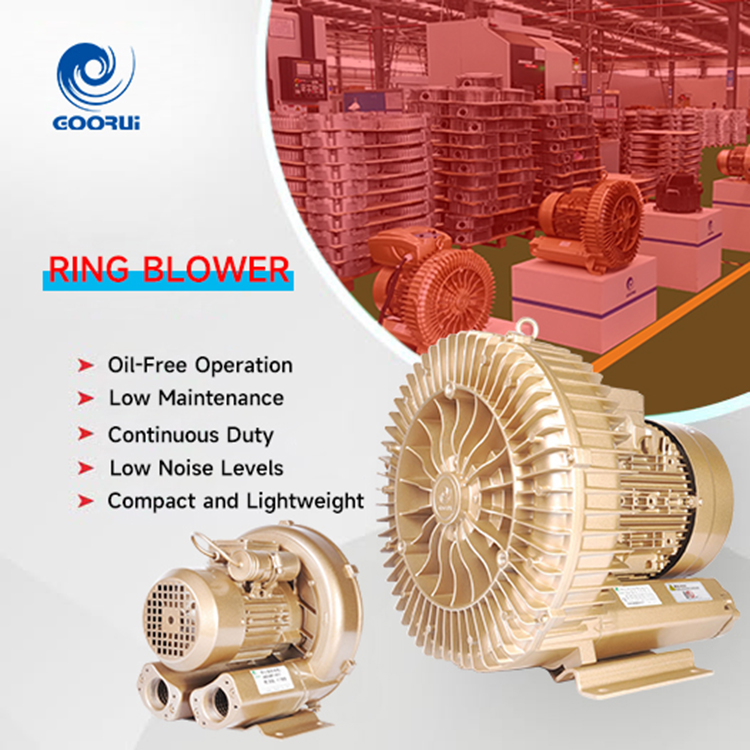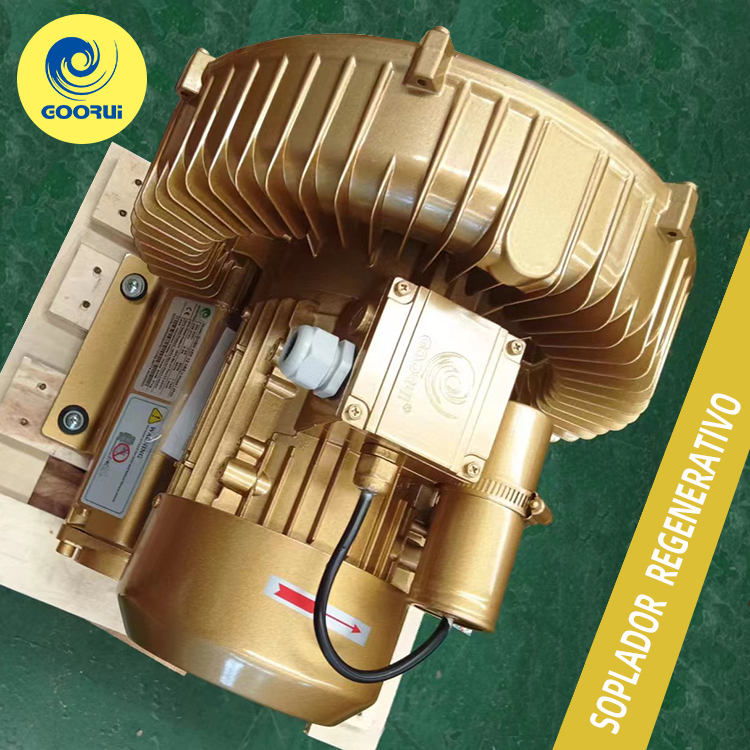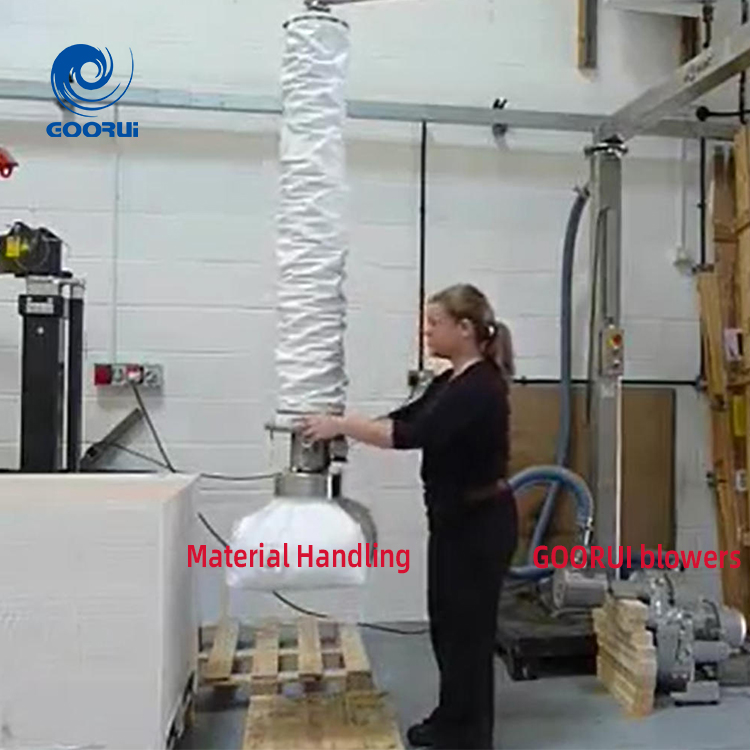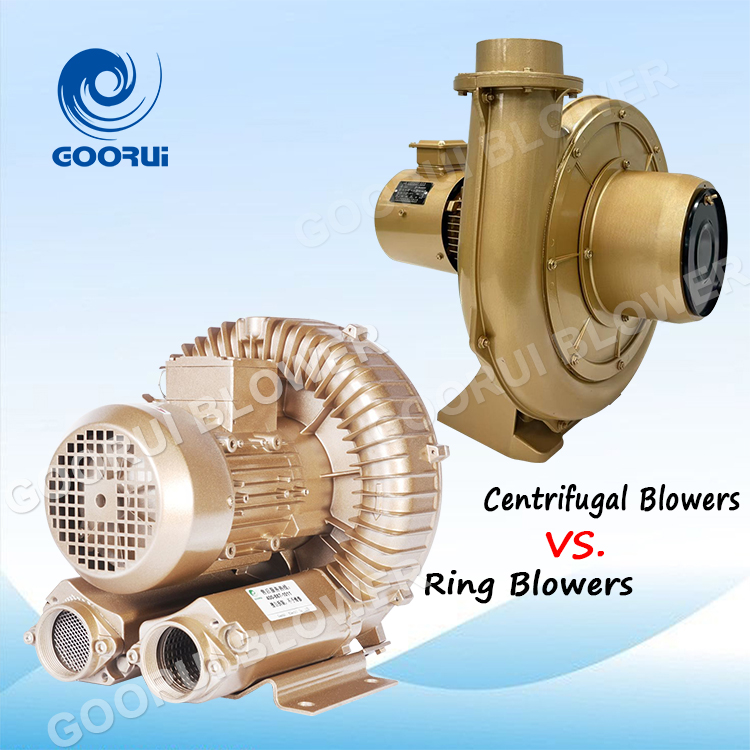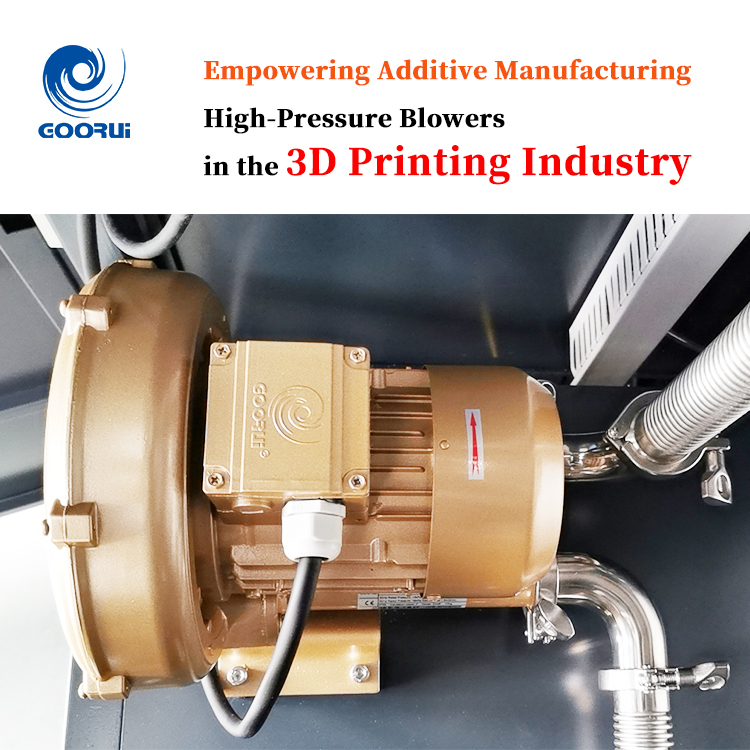
Amid the wave of intelligent manufacturing, the 3D printing (Additive Manufacturing, AM) industry is experiencing a critical transition from “laboratory technology” to “large-scale mass production”. With the dual tracks of industrial-grade scaling and consumer-grade popularization, technological breakthroughs and application expansion continue to accelerate. As a core auxiliary equipment in the Additive Manufacturing industry chain, high-pressure blowers, with their high-efficiency airflow control, stable pressure output, and flexible adaptability, are deeply integrated into the entire process of 3D printing—from forming to post-processing, from consumer-grade desktop devices to industrial-grade production lines. They have become an “invisible cornerstone” ensuring printing accuracy, improving production efficiency, and expanding application boundaries. The in-depth integration of the two is not only promoting the industrial implementation of 3D printing technology but also opening up a new professional and refined market track for the high-pressure blower industry.
Current Development of the 3D Printing Industry: Technological Iteration Gives Birth to Diversified Auxiliary Needs
In recent years, the 3D printing industry has ushered in explosive growth. In 2025, the domestic market scale reached 70 billion yuan, a year-on-year increase of 30%, forming a diverse market structure of “industrial grade – consumer grade – medical care”. On the technological side, breakthroughs such as ultra-fast printing, multi-nozzle/multi-color printing, and deep AI integration have resolved the core contradiction between speed and accuracy in traditional printing, pushing the industry into the “era of mass production”. On the market side, industrial-grade metal printing has realized the batch application of core structural parts in aerospace, new energy vehicles, and other fields; the price of consumer-grade equipment has dropped to the range of 2,000-4,000 yuan, and export volume continues to lead the world.
As 3D printing technology iterates toward high precision, high speed, large-scale, and multi-materials, the requirements for auxiliary equipment have become increasingly stringent. Whether it is Fused Deposition Modeling (FDM), Selective Laser Sintering (SLS), or Stereolithography (SLA), the core process cannot be separated from stable airflow control, temperature regulation, dust removal, and vacuum fixation—exactly the needs that high-pressure blowers with “dual air suction and injection functions, high pressure, and strong reliability” can corefully meet. High-pressure blowers require no complex maintenance; there are no other moving parts except the impeller, enabling them to adapt to the long-term continuous operation of 3D printing. Their high-pressure airflow can accurately meet the personalized needs of different printing processes, becoming a key link connecting 3D printing hardware and process optimization.
Analysis of Core Application Scenarios of High-Pressure Blowers in the 3D Printing Industry
The application of high-pressure blowers in 3D printing covers the entire process, covering both consumer-grade and industrial-grade scenarios. Different processes and equipment have different requirements for blowers, but all focus on “airflow control” to achieve process optimization. They can be divided into five core scenarios:
1). Print Forming Stage: Ensuring Accuracy and Avoiding Forming Defects
The forming stage is the core of 3D printing. The precise airflow control of high-pressure blowers directly determines the dimensional accuracy and surface quality of printed parts, making it the most widely used scenario.
In consumer-grade FDM printing, high-pressure blowers (mostly 24V DC centrifugal blowers) mainly undertake the dual responsibilities of nozzle cooling and layer cooling. When the nozzle extrudes molten PLA, PETG and other consumables, the focused “air knife” output by the high-pressure blower can accurately align with the newly deposited print layer for rapid cooling and solidification. This effectively avoids hanging, stringing, warping and other defects of printed parts, while not affecting the temperature stability of the nozzle hot block. At present, models such as 5015 and 4010 high-pressure blowers have become the mainstream configuration of consumer-grade equipment; some high-end equipment improves airflow intensity by upgrading the blower to ensure accuracy under faster printing speeds.
In industrial-grade SLS metal printing, the role of high-pressure blowers is more critical. During the process, the laser sinters metal powder and generates high temperature. On the one hand, the high-pressure blower continuously 输送 s stable airflow to control the temperature uniformity of the sintering area and prevent deformation of printed parts caused by local overheating; on the other hand, it timely blows away unsintered metal powder to avoid adhesion on the surface of printed parts and improve surface finish. Meanwhile, high-pressure blowers can cooperate with pneumatic systems to achieve accurate transportation of metal powder, ensuring stable supply of printing raw materials and reducing material waste.
In addition, in stereolithography 3D printing, high-pressure blowers can accelerate the curing process of resin printed parts by volatilizing VOCs (Volatile Organic Compounds) released by resin, thereby improving curing efficiency and ensuring operational safety.
2). Vacuum Fixation: Strengthening Stability and Improving Printing Accuracy
During 3D printing, the stability of the print platform directly determines the flatness and dimensional accuracy of printed parts, especially in large-size and high-precision printing scenarios, where printed parts are prone to scrapping due to displacement. High-pressure blowers rely on their strong negative pressure suction to achieve firm fixation of print substrates.
Its working principle is to use the suction of high-pressure blowers to form a stable vacuum environment on the print platform, firmly adsorbing print boards, resin tanks and other materials on the platform to prevent displacement caused by equipment vibration and material shrinkage during printing. This fixation method does not require additional fixtures, avoiding damage to the surface of printed parts by fixtures. At the same time, it adapts to print substrates of different sizes and materials, and is widely used in industrial-grade large-size print equipment and high-precision stereolithography equipment. The high negative pressure characteristics of high-pressure blowers can ensure stable adsorption force during long-term printing, effectively reducing the failure rate of printing.
3). Dust and Exhaust Gas Treatment: Ensuring Equipment and Environmental Safety
3D printing generates a large amount of dust (such as metal powder, resin powder) and harmful exhaust gas (such as resin volatiles, high-temperature consumable decomposition gases). These substances not only pollute the internal components of equipment and affect printing accuracy but also harm the health of operators. High-pressure blowers rely on efficient airflow delivery to become core equipment for dust and exhaust gas treatment.
In terms of dust treatment, high-pressure blowers use suction to draw powder particles generated during printing into the filtration system for dust separation and recovery. This not only prevents dust from clogging nozzles and affecting equipment life but also recovers unsintered powder consumables to reduce production costs. In industrial-grade metal printing, this dust recovery function is particularly important, which can greatly improve the utilization rate of metal powder.
In terms of exhaust gas treatment, high-pressure blowers can quickly draw out VOCs and harmful gases generated during printing and send them to the purification system to prevent exhaust gas from accumulating in the print cavity, protect equipment components from corrosion, and ensure that the operating environment meets safety standards. Especially in closed 3D printing equipment, high-pressure blowers can maintain airflow circulation inside the cavity, realizing exhaust gas discharge while avoiding external pollutant intrusion, and ensuring a clean printing environment.
4). Post-Processing Stage: Optimizing Surface Quality and Improving Production Efficiency
After 3D printing is completed, printed parts often have excess consumables, powder or support structures remaining, requiring post-processing such as cleaning, grinding and drying. High-pressure blowers can significantly improve the efficiency and effect of post-processing.
In the cleaning stage, the high-pressure airflow output by high-pressure blowers can quickly remove residual powder and debris on the surface of printed parts without manual cleaning, especially for printed parts with complex structures and small gaps. This not only improves cleaning efficiency but also avoids damage to printed parts caused by manual cleaning. In the drying stage, for resin printed parts or printed parts with water-soluble supports, high-pressure blowers can continuously deliver dry airflow to accelerate water evaporation on the surface of printed parts, shorten drying time and improve post-processing efficiency.
In addition, in industrial-grade batch production, high-pressure blowers can be combined with automated production lines to realize automatic transportation and cleaning of printed parts, promoting the transformation of 3D printing from “single-machine production” to “intelligent production line”.
5). Equipment Heat Dissipation: Ensuring Long-Term Stable Operation
During long-term operation, components such as nozzles, motors, and control systems of 3D printing equipment generate a lot of heat. If heat cannot be dissipated in time, it will lead to equipment performance degradation, component damage, and even affect printing accuracy. High-pressure blowers rely on efficient forced convection to achieve precise heat dissipation of core components.
Compared with ordinary axial flow fans, high-pressure blowers have higher airflow pressure and stronger targeting. Through precise air duct design, they can directly deliver cold air to heating components (such as nozzle heating blocks, motors, power supplies), quickly discharge hot air, and maintain stable equipment operating temperature. In compact 3D printing equipment, small high-pressure blowers can replace traditional cooling fans to achieve efficient heat dissipation in limited space, avoiding problems such as “thermal creep” (heat migration causing premature softening and clogging of consumables).
Synergistic Development of the Two: Opportunities and Challenges Coexist
The rapid development of the 3D printing industry has brought new growth opportunities for the high-pressure blower industry, while also putting forward higher technical requirements, forming a pattern of “mutual empowerment and coordinated development”.
1). Industry Opportunities: Emerging Scenarios Generate Differentiated Needs
With the continuous expansion of 3D printing technology, the application scenarios of high-pressure blowers are constantly enriching. As 2026 is the first year of the outbreak of multi-nozzle 3D printing, higher cooling efficiency is required for multiple hot-end parallel printing, driving the upgrade of high-pressure blowers to “high power, low noise, and miniaturization”. The mass production of metal 3D printing requires high-pressure blowers to have higher temperature resistance and powder adaptability, adapting to the high temperature and high wear conditions of metal powder. The development of emerging fields such as bioprinting and flexible electronic printing has put forward stricter requirements for the airflow accuracy and cleanliness of high-pressure blowers, giving rise to demand for customized high-pressure blowers.
At the same time, the acceleration of domestic substitution of 3D printing technology has also provided development opportunities for domestic high-pressure blower enterprises. At present, the domestic substitution rate of core components of 3D printing equipment is constantly improving. If high-pressure blowers as auxiliary equipment can achieve deep integration with domestic 3D printing equipment, they can break the monopoly of foreign brands and occupy a larger market share. In addition, policy support also injects momentum into the coordinated development of the two. The Ministry of Commerce and other 8 departments have included desktop 3D printing equipment in the key direction of “digital product consumption”, which indirectly drives the demand growth of supporting equipment such as high-pressure blowers.
2). Existing Challenges: Technical Adaptability and Standard Deficiency Need to Be Broken Through
Although the application of high-pressure blowers in the 3D printing industry is increasingly widespread, they are facing two core challenges. First, insufficient technical adaptability. Different 3D printing processes and equipment models have different requirements for the pressure, flow, size, noise and other parameters of high-pressure blowers. Many high-pressure blower products have the problem of “strong versatility but weak targeting”, making it difficult to meet the needs of high-precision and personalized printing. For example, consumer-grade equipment requires miniaturized and low-noise blowers, while industrial-grade metal printing requires high-pressure and high-temperature-resistant blowers. Existing products cannot fully cover all scenarios.
Second, the lack of industry standards. At present, the 3D printing industry has not formed unified supporting standards for high-pressure blowers. The interfaces and parameter requirements of different equipment manufacturers are inconsistent, so high-pressure blower enterprises need to customize products for different manufacturers, increasing production costs and R&D difficulties. At the same time, there is no unified standard for quality inspection and performance evaluation of high-pressure blowers. Many low-quality products have flooded the market, affecting printing effects and equipment life.
Future Outlook: Technological Integration Promotes Two-Way Upgrade
With the development of 3D printing technology toward intelligence, large-scale and diversification, the integration of high-pressure blowers and 3D printing will be more in-depth, showing two development trends in the future.
On the one hand, high-pressure blowers will be upgraded to “customized, intelligent and efficient”. Enterprises will develop more targeted products according to the needs of different 3D printing processes, such as temperature-resistant high-pressure blowers adapted to metal printing, clean high-pressure blowers adapted to bioprinting, and high-efficiency cooling blowers adapted to multi-nozzle printing. At the same time, combined with AI and Internet of Things technology, high-pressure blowers will realize intelligent speed regulation, status monitoring and fault warning, and form linkage control with 3D printing equipment, automatically adjusting airflow pressure and flow according to printing progress, further improving printing accuracy and production efficiency. In addition, low noise and energy saving will become important development directions of high-pressure blowers. Through impeller design optimization and new materials, high performance can be achieved while reducing energy consumption and noise, adapting to the needs of consumer-grade and medical scenarios.
On the other hand, 3D printing technology will support the R&D and production of high-pressure blowers. Using 3D printing technology, core components such as impellers and air ducts of high-pressure blowers can be quickly manufactured, shortening the R&D cycle and reducing customization costs. At the same time, the precise manufacturing of complex air duct structures can improve the airflow control accuracy of blowers. For example, special-shaped impellers manufactured by 3D printing can optimize airflow distribution and improve blower efficiency. In addition, the personalized customization capability of 3D printing can realize seamless integration of high-pressure blowers and 3D printing equipment, promoting the formation of an integrated solution of “equipment – supporting facilities”.
Conclusion: As a subversive additive manufacturing technology, 3D printing is reshaping the production mode of the manufacturing industry; as core auxiliary equipment, high-pressure blowers have laid a solid foundation for its large-scale and high-precision development. The in-depth integration of the two is not only expanding the industrial boundaries of each but also promoting the upgrading and development of the intelligent manufacturing industry. With the continuous breakthrough of technology and the gradual improvement of industry standards, high-pressure blowers will play a more important role in the 3D printing industry, helping 3D printing develop from “niche technology” to “mass application” and from “prototype verification” to “batch production”, and jointly create a new chapter of intelligent manufacturing.
URL link: https://www.goorui.com/