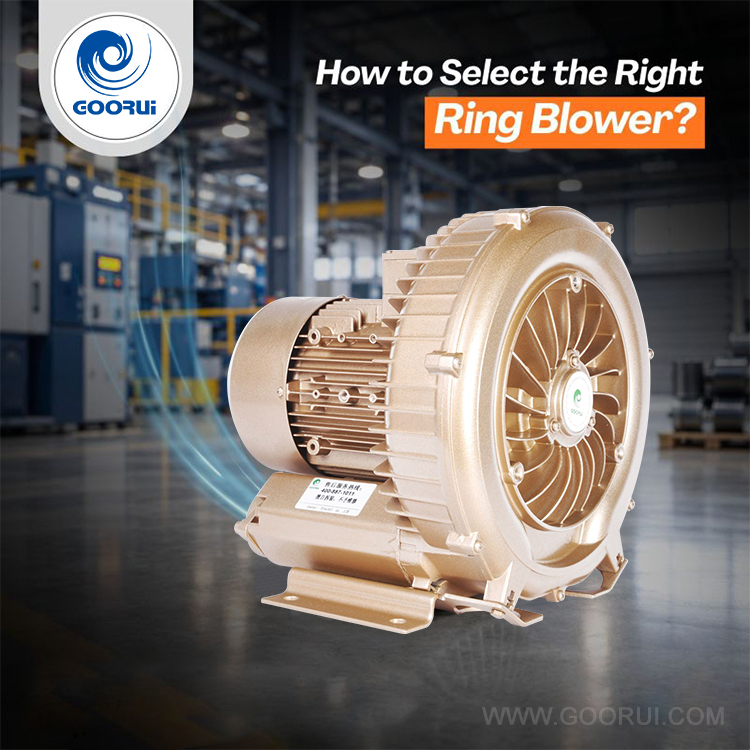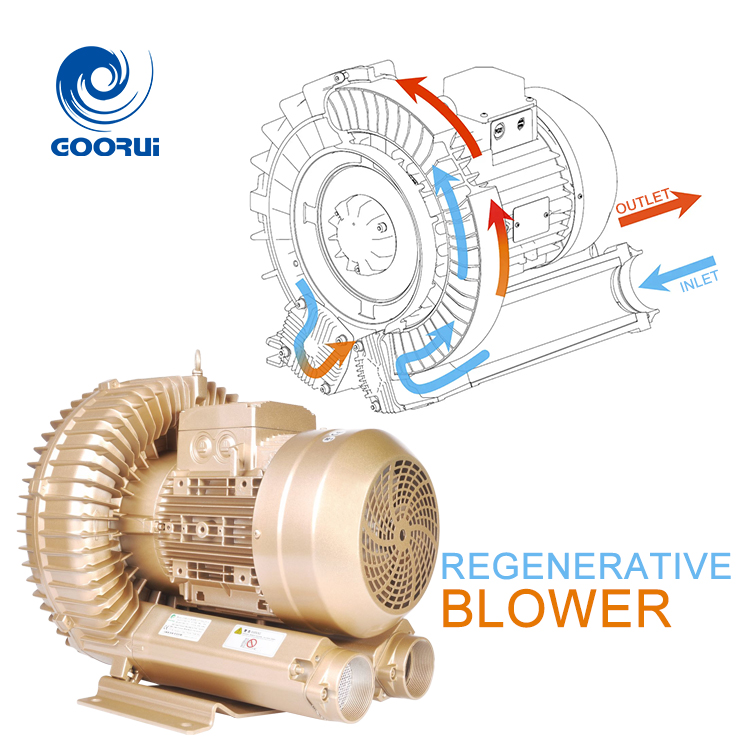
Regenerative blowers (also known as ring blowers or side channel blowers) are highly reliable industrial machines designed to move large volumes of air at moderate pressures or produce strong vacuums.
Unlike standard compressors or fans, a single regenerative blower can be configured for either pressure (air blowing) or vacuum (suction) applications simply by utilizing different ports on the housing.
How They Work: The “Regenerative” Principle
The core component is a non-contacting, fast-spinning impeller with dozens of small blades.
-
Air Intake: Air or gas enters through the inlet port and gets trapped between the rotating blades.
-
Centrifugal Acceleration: As the impeller spins, centrifugal force pushes the air outward into a ring-shaped side channel.
-
The Regeneration Effect: The unique contour of the housing reflects the air back toward the base of the next set of blades.
-
Vortex Generation: This looping action repeats multiple times during a single revolution. With each “regeneration,” the air gains velocity and pressure, following a spiral/vortex path around the casing until it is stripped away and forced out the exhaust.
Air (Pressure) vs. Vacuum Performance
A regenerative blower creates a pressure differential. Depending on how you connect it to your system, it serves two entirely different functions:
| Feature | Air (Pressure) Application | Vacuum Application |
| Active Port | Outlet (Exhaust): Connected to the system to push air out. | Inlet (Suction): Connected to the system to pull air in. |
| Open Port | Inlet: Draws in clean, ambient atmospheric air. | Outlet: Discharges exhaust air into the environment. |
| What it Does | Overcomes system resistance to push air through tight spaces or liquids. | Creates a low-pressure pocket to lift, hold, or extract materials. |
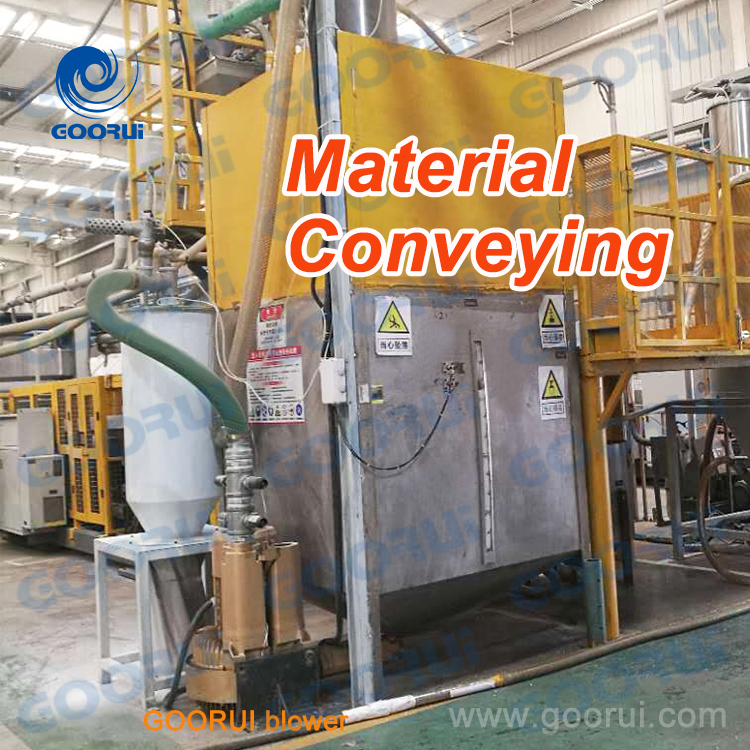
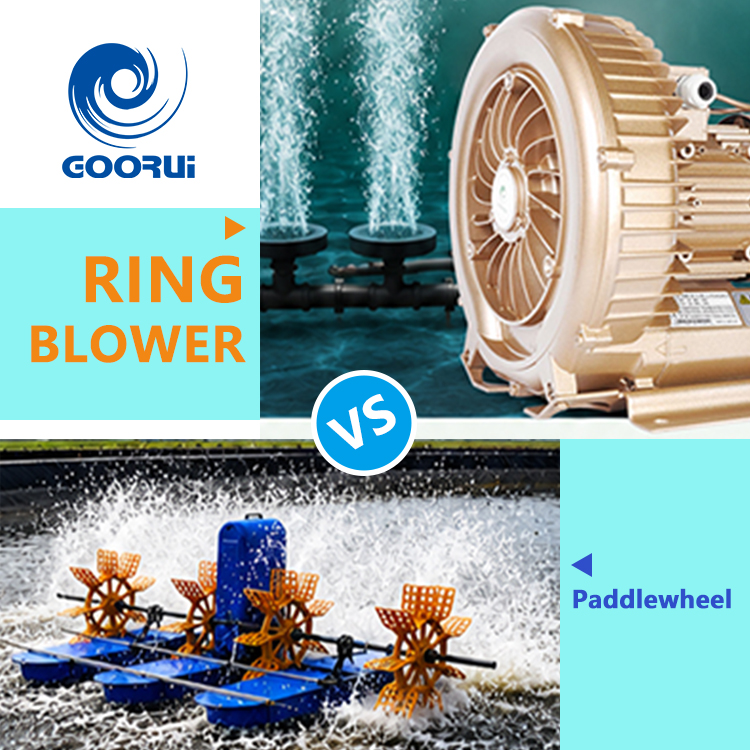
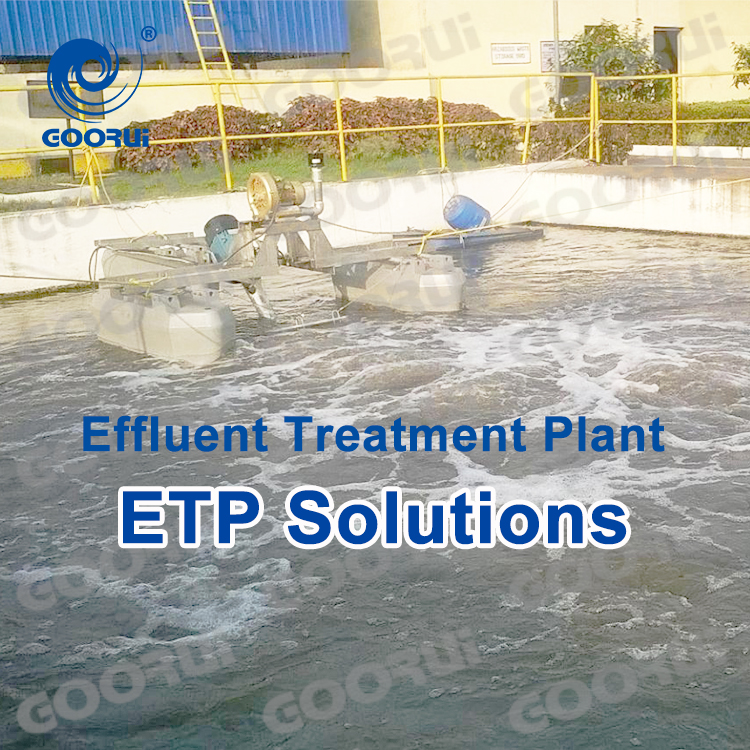
| Typical Uses | Wastewater aeration, air knives, component drying, pond sparging. | Vacuum lifting, CNC routing hold-down, soil vapor extraction. |
Key Advantages
-
Oil-Free Operation: Because the impeller never touches the housing, there is no mechanical friction and zero need for internal lubrication. The discharged air is 100% clean and pulsation-free.
-
Virtually Maintenance-Free: The only moving parts are the motor shaft and the impeller. The only wear items are the self-lubricating bearings.
-
Energy Efficient: Unlike air compressors that compress air to a high, fixed pressure regardless of demand, a regenerative blower only uses the energy required to overcome the actual system resistance (load) it encounters.
-
Compact & Quiet: They are significantly smaller and quieter than positive displacement (rotary lobe) blowers, making them ideal for point-of-use indoor factory installations.
Crucial Maintenance Tip: Because of the razor-thin tolerances between the spinning impeller and the housing, always use an inlet filter. If debris or a rogue bolt gets sucked into the blower, it will instantly lock up and ruin the machine. Similarly, a relief valve should be installed to prevent the blower from overheating if the airflow is completely blocked (“dead-headed”).
Are you sizing a blower for a specific project, or trying to replace an existing unit? If you can share your required airflow (CFM) or pressure/vacuum depth (in. H2O / in. Hg), I can help you narrow down the technical specifications.